
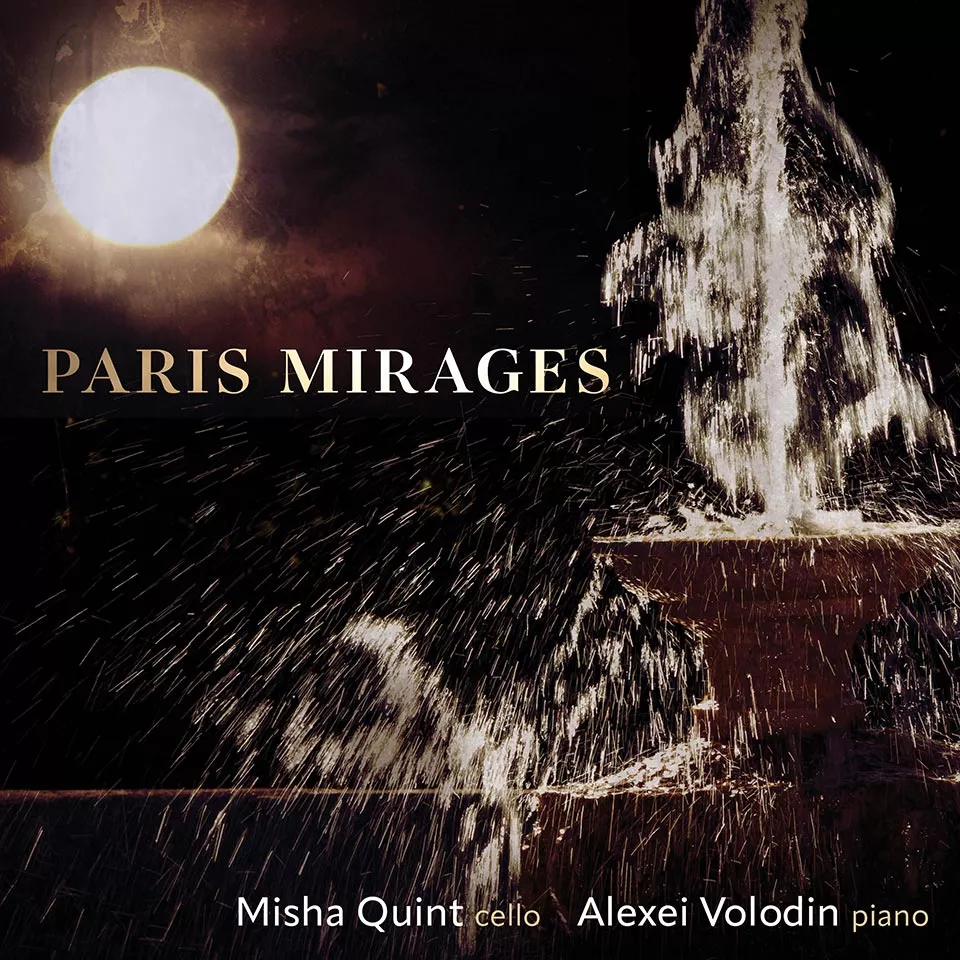

Paris Mirages
Alexei Volodin piano
All the composers represented in Paris Mirages lived, worked together, and heard each other's music in Fin du siècle Paris in this period of momentous musical and artistic creativity, linking the end of Romanticism with the beginnings of the modern era. The musicians who premiered or transcribed these pieces for cello knew and worked with the composers, and were living in Paris. The program choices on this recording intends to connect these turn of the century, avant-garde pieces and show how they change and influence listeners in the present with a fresh interpretation.
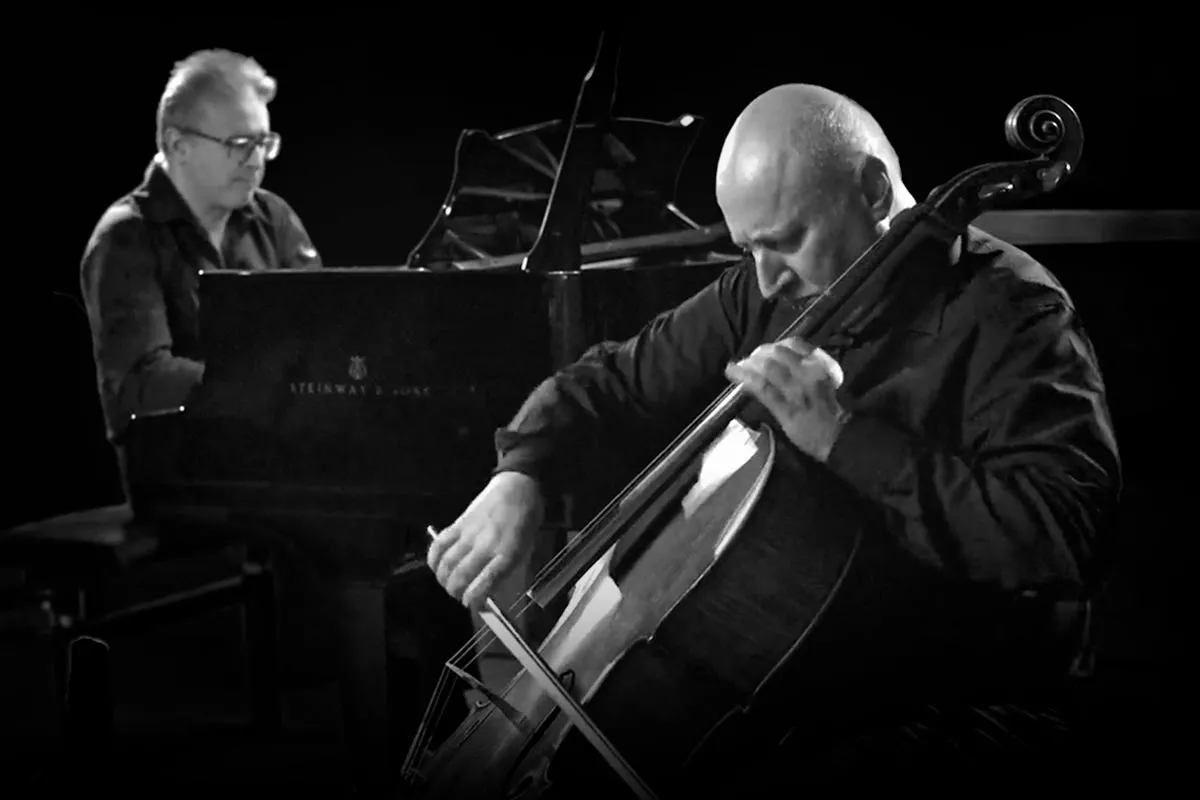
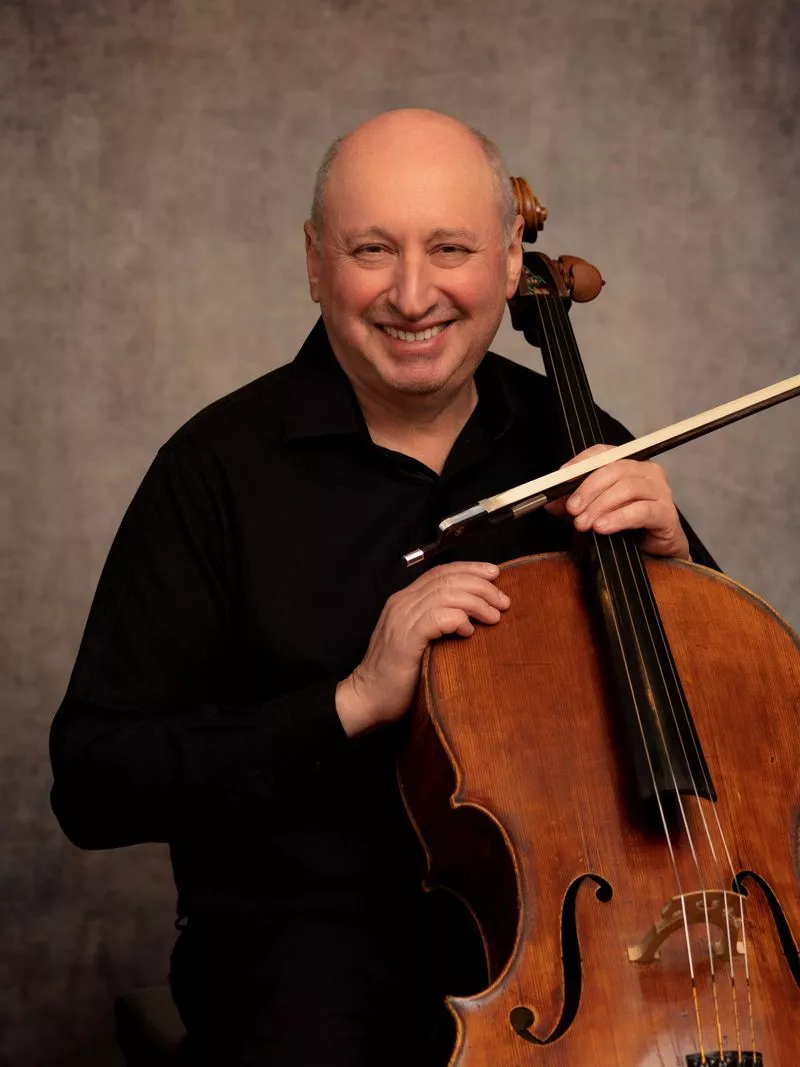
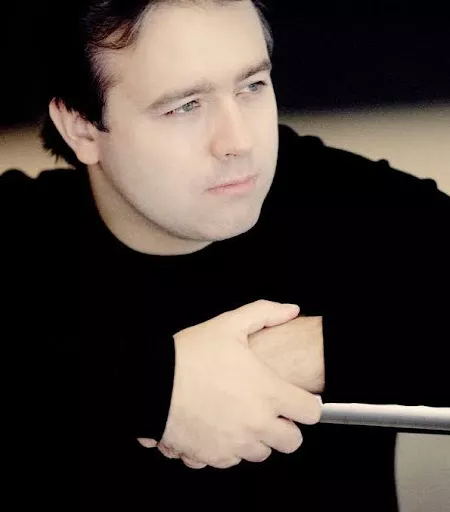
Credits
Recording Producer: Jennifer Nulsen
Editing, Mixing and Mastering: Jennifer Nulsen
Recording Engineer: Julien Brocal
℗ & © 2026 InterHarmony Records, New York. All rights reserved
Album Artwork: Denise Burt
Photography: Alexander Von Busch
Liner Notes: Richard Brasier, Matthew Brown
Recorded at Jardin Musical, Brussels, 2024
Download - Choose Format
VIDEOS:
See InterHarmony on YouTubeProgramme Notes
Chamber music played a significant role in fin de siècle Paris: though traditionally associated with amateur music making, it gradually migrated from the salon to the concert hall thanks in large part to the proliferation of public venues and professional ensembles in the city. After France's defeat in the Franco-Prussian War (1870), organizations such as Société Nationale de Musique promoted chamber music as part of its mission "to spread the gospel of French music." Music academies like the Paris Conservatoire and the École Niedermeyer followed suit, encouraging students to perform chamber works of the past and create new ones of their own.
Claude Debussy was no exception in this regard: while still studying at the Conservatoire, he wrote his Piano Trio in G major in 1880 and Nocturne et Scherzo for cello and piano soon after. The latter, which may well have evolved from a piece for violin and piano that Debussy performed with Maurice Thieberg at the salon Flaxland on 12 May 1882, was completed on 14 June 1882 while Debussy toured Europe for the third time with Madame Nadezhda von Meck and her family. The score exists today as a single movement and is the quintessential example of salon music: its outer sections have the lightness typical of a Scherzo, whereas the middle section has the more passionate feel of a Nocturne.
In their delightful rendition of the Nocturne et Scherzo, Misha Quint and Alexei Volodin capture the charm and passion of Debussy's music with consummate artistry; they allow the cello to shine and the piano to add glittering harmonic support.
While it is impossible to know how much Debussy's Nocturne et Scherzo for cello and piano differed from his earlier score for violin and piano, the cello transcription of "Clair de lune" literally transposes Debussy's piano score down from D♭ major to A major. It turns out that the original version belonged to a group of short salon pieces that Debussy completed around 1890, a group that included some of the most beloved compositions he ever wrote: Petite Suite (1888–1889); Deux Arabesques (1888–1889); and Rêverie (1890). Though initially conceived for piano solo or piano duet, many of these works circulated as duets for cello and piano, as did early songs, such as "Il pleure dans ma cœur" (Ariettes oubliées, 1885–1887).
Some even have programmatic allusions: "Clair de lune" was not only inspired by a poem from Verlaine's collection Fêtes galantes (1869), but its opening measures recall the start of Debussy's song "La Morte des amants" from his Cinq poèmes de Charles Baudelaire (1887–1889). As with Debussy's other salon pieces, "Clair de lune" stands out for its melodic arabesques, lush harmonies, supple rhythms, and fluid three-part form.
Misha Quint conveys the emotional intensity of the movement's main theme, allowing it to soar to ever greater heights. Alexei Volodin supports this line with shimmering arpeggios and beautifully crafted countermelodies. The duo is particularly effective at bringing out the melancholy overtones of the ending, thereby recreating the intoxicating charm of a nocturnal landscape bathed in moonlight. This is tone painting at its best.
Despite the success of his Quatuor à cordes, which received its premier at the Société Nationale de Musique in December 1893, Debussy wrote few chamber works during the 1890s and 1900s; it wasn't until 1915 that his publisher Jacques Durand encouraged him to compose a set of sonatas for an array of different instruments. The first year of WWI had already taken a heavy toll on Debussy. But, after hearing Saint-Saëns's Septet and being contracted to edit J. S. Bach's chamber music, he decided to write six sonatas "in the ancient mold," starting with the Sonate pour violoncelle et piano. Debussy finished the work quickly in July 1915, while on vacation in Pourville-sur-mer in Normandy. Two years later, on 24 March 1917, he performed it in Paris with Jacques Salmon at a fundraiser for the aid organization Le Vêtement du blessé.
The sonata is one of Debussy's most evocative scores. Stately but melancholy, the opening Prologue alludes to the start of Rameau's opera Les Fêtes de Polymnie (1745), a work that he had edited for Durand in 1908. Midway through, it seems to recall the majestic central section of "La Cathédrale engloutie" (Préludes, Bk 1). The second movement is another matter entirely. Labelled Sérénade, it features menacing pizzicato sections, striking double stops, and violent changes of texture. The results are far ahead of their time and inspired Benjamin Britten to compose the "Serenade" for his Cello Suite No. 1 (1964). Debussy's Sonate pour violoncelle et piano ends with a boisterous Finale that brims with Spanish style guitar effects.
In a truly outstanding performance of the sonata, Misha Quint and Alexei Volodin reveal every nuance of Debussy's score with extraordinary finesse, conveying the grandeur and pathos of the Prologue, the nervousness and anxiety of the Sérénade, and the excitement of the finale.
The same shift from private performances and public concerts can be seen with Élégie, Op. 24 by Gabriel Fauré. Unlike Debussy, who disliked bourgeois salon culture, Fauré was deeply involved in Parisian musical salons, viewing them as crucial for performing his songs and chamber pieces, for cultivating influential patrons such as the Princesse de Polignac, Mme de Saint-Marceaux, and Countess Greffulhe, and for connecting with creative people, such as Marcel Proust and Camille Saint-Saëns. He wrote Élégie in 1880, intending it to appear as the slow movement of a new cello sonata. But the sonata never saw the light of day. Élégie was therefore published independently in January 1883 and officially premiered at the Société Nationale de Musique in December 1883, with Fauré accompanying the cellist Jules Loeb. Fauré later recast the movement for cello and orchestra and performed it with Pablo Casals in April 1901.
Once again, Misha Quint and Alexei Volodin capture the essence of this remarkable score. Quint gives the famous opening melody the dark, somber tone that it deserves, while Volodin supports him perfectly with persistent eighth note chords in the piano. The two players then interact with each other to perfection in the contrasting middle section, skillfully trading off the complex syncopated rhythmic patterns. Their performance of the violent cadenza-like section is superbly forceful and virtuosic. Having allowed the piece to reach a brilliant climax, the duo end with the same sense of pathos with which it began. The emotional arc of Élégie is articulated perfectly.
Just as Nocturne et Scherzo was probably based on a lost piece by Debussy for violin and piano, so Pièce en Forme de Habanera for cello and piano by Maurice Ravel was heir to a two-piano piece entitled "Habanera" that was composed in 1895, published in the set Sites auriculaires, and premiered by Marthe Dron and Ricardo Viñes on behalf of the Société Nationale de Musique on March 5, 1898. The habanera is a Cuban dance that became especially popular in Paris after the success of Bizet's opera Carmen (1875). A decade after completing "Habanera," Ravel returned to the dance's duple rhythms, distinctive ostinato patterns, and sensuous melodic writing in the third movement of his orchestral score Rapsodie espagnole (1907–1908) and in a separate piece entitled Vocalise-Étude (1907), which he later recast as Pièce en Forme de Habanera for cello and piano.
As with the works by Debussy and Fauré for cello and piano, Ravel's habanera stands out for its intense melodic writing, which is so ideally suited to the cello. It evokes the intricate melodic arabesques that are so typical of Spanish folk music. Ravel's mother, who was of Basque heritage, grew up in Madrid and sang vernacular songs to him during his childhood.
In their superb performance, Misha Quint and Alexei Volodin convey the brooding intensity of Ravel's score to perfection. Quint highlights the soulful nature of the melodic line in a way that verges on the style of cante jondo. Volodin's accompaniment provides a vivid backdrop, rich in carefully graded tone colors. The rapid changes in texture are thrilling and reveal, yet again, the consummate mastery of the two performers.
Although the lyrical qualities of "The Swan" from Carnival of the Animals by Camille Saint-Saëns rival those of "Clair de lune," Élégie, and Pièce en Forme de Habanera, the movement's purpose was utterly different and underscores the vital role chamber music played and continues to play in the training of classical musicians. Saint-Saëns apparently wrote the fourteen-movement suite in a small Austrian village in February 1886 following a disastrous concert tour of Germany. He reportedly wanted to write something "amusing" for his students at the École Niedermeyer de Paris and was adamant that it would not be published in his lifetime for fear that it might erode his reputation as a "serious" composer. But the work was performed at a private concert given by the cellist Charles Lebouc on 3 March 1886 and "The Swan" was published in 1887 in arrangement for cello and one piano. The work was subsequently performed at semi-private events hosted by various chamber societies, such as La Trompette, wealthy patrons, such as Pauline Viardot, and on programs presented during the festival of Mi-Carême.
In this exquisite recording, Misha Quint and Alexei Volodin convey the intimate beauty and poignancy of Saint-Saëns's iconic work. With a full rich tone and carefully controlled rubato, Quint's cello part evokes a magnificent white bird, while Volodin's shimmering piano arpeggios show it gliding gracefully over tranquil waters. The duo leaves no doubt that the movement is a "swan song," that final refrain sung just before death.
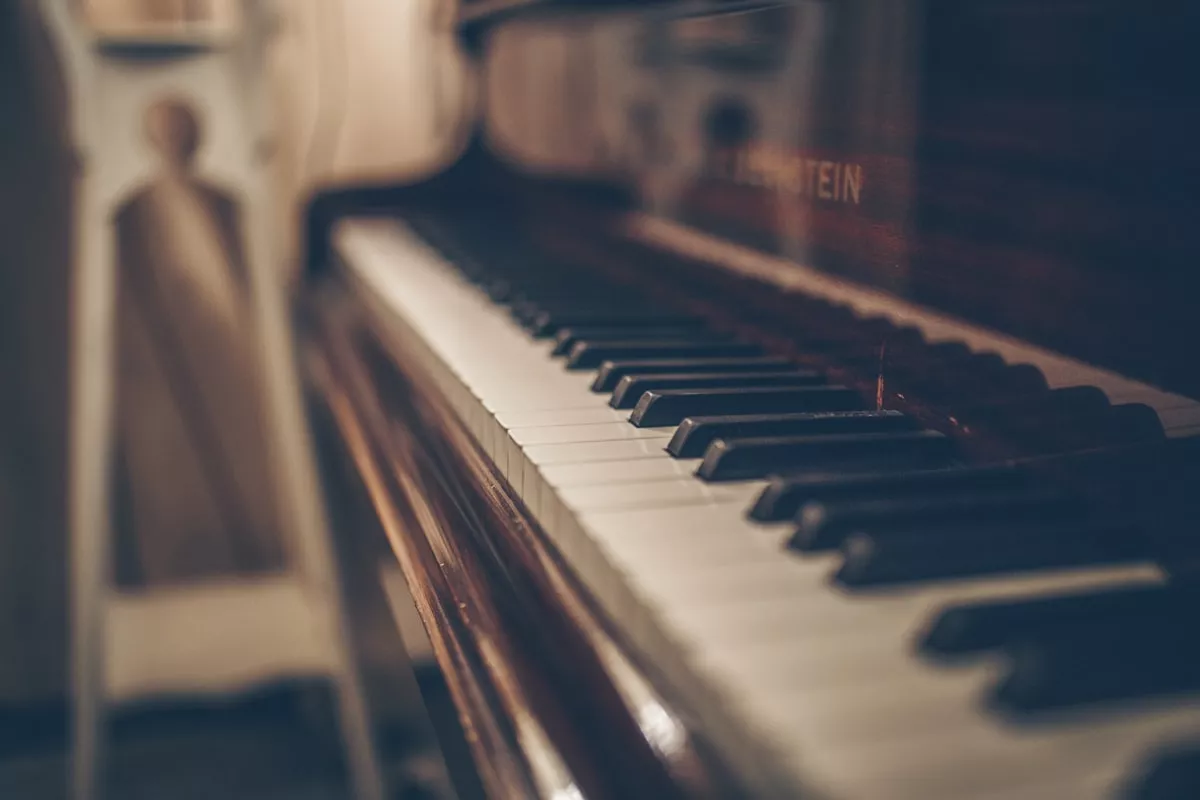
One could argue that César Franck's legacy as a composer rests on three major works, all of which were composed during his final years: the Sonata for Piano and Violin (1886), the Symphony in D minor (1886–88) and the posthumously published Three Chorals for Organ (1890). The Sonate pour Piano et Violon is one of César Franck's best-known compositions and is widely regarded as one of the finest sonatas of its kind ever written.
Following a performance of the sonata in Paris on 27 December 1887, Jules Delsart, a cellist who had participated in the performance as part of a quartet, was so enthusiastic that he asked Franck for permission to arrange the violin part for cello. In a letter to his cousin, Claire Brissaud, presumably written shortly afterwards, Franck mentioned: "Mr Delsart is now working on a cello arrangement of the sonata." There is no doubt that Franck consented to this arrangement, given that the piano part remained unchanged. Around 1888, the renowned publishing house Hamelle did not publish the arrangement as a separate edition, but enclosed the cello part with its own plate number in the score. César Franck probably did not object to the reference to Delsart on the title page, given that he gave copies to friends and acquaintances, sometimes inscribing them.
A comparison of the two solo parts shows that Delsart remained faithful to the original, and generally limited himself to transposing the violin part to a lower register. There are only a few exceptions where Delsart adapted the music to the cello's technical playing conditions. Delsart's arrangement of Franck's sonata for piano and cello has become one of the beloved sonatas in the instrument's repertoire. However, according to Eugène Ysaÿe, Franck had told him that the sonata was originally intended for violin or cello, and that a version for cello in Franck's own hand exists. Although such a manuscript has yet to materialise, a study of Franck's catalogue of works confirms that he did indeed plan to write a stand-alone cello sonata in 1890, the year of his death.
Not only does Franck's Sonata illustrate his role as a leading exponent of the French Romantic tradition and his influence on later composers, it also reflects the flourishing of Parisian musical life. For performers, it is a cornerstone of the Romantic chamber music repertoire, demanding technical mastery and expressive sensitivity. For listeners, it offers a profound emotional journey, ranging from lyrical tenderness to passionate intensity, and is widely regarded as one of the most moving sonatas of the nineteenth century.
The sonata is built on cyclic form, meaning themes recur across multiple movements, binding the work together into a unified whole. This was a hallmark of Franck's style and influenced later composers like Debussy and Ravel. Composed across four movements, Allegretto ben moderato is lyrical and flowing; Allegro contains dramatic contrasts and virtuosity; Recitativo-Fantasia is improvisatory with free-form dialogue, and Allegro poco mosso sees a cyclical return of earlier themes.
This recording by Misha Quint and Alexei Volodin is a welcome addition to the catalogue of Franck's sonata recordings. It is a striking performance of a piece that requires technical and musical cohesion between the pianist and cellist. The strength of the phrasing and the nuanced shaping of the cello part, coupled with the dynamic piano playing, demonstrate the fine musicianship of both performers very well. Quint and Volodin have captured the essence of César Franck, the man and the musician, with authority, which is not at all easy to achieve.
Engaging with the César Franck Sonata—whether in its violin or cello form—means encountering a masterpiece that embodies Romantic ideals of passion, innovation, and unity. It's not just a technical showpiece, but a work that continues to inspire musicians and audiences with its emotional depth and structural brilliance. The work's dual identity makes the piece a rare example of Romantic repertoire that bridges two instrumental traditions.